
 Chemical stability is another key indicator. In an oral environment with a pH value ranging from 3 to 10, the ion release rate of medical-grade zirconia is strictly limited to less than 0.5 micrograms per square centimeter per year, while inferior materials may release more than 5 micrograms of metal ions per square centimeter. A study published in the Journal of Dental Materials indicates that when the concentration of zirconium ions in saliva exceeds 1.5 micrograms per milliliter, the risk of gum tissue inflammation increases by 40%. Looking back at the cases in the European dental market in 2018, a small dental clinic caused surface corrosion of about 300 crowns within six months after implantation due to the use of uncertified zirconia blocks, which eventually led to a collective medical dispute with a total compensation of up to 800,000 euros. This fully demonstrates the economic and safety value of compliance.
From the perspective of aesthetics and precision, the sintering shrinkage rate of medical-grade dental zirconia blank is precisely controlled between 20% and 22%, with a fluctuation range of no more than ±0.5%, which ensures that the edge gap of the restoration is less than 30 microns, significantly lower than the clinically acceptable threshold of 80 microns. Comparative experiments show that the variance of the shrinkage rate of non-standard materials may reach ±3%, resulting in 60% of the restorations requiring clinical adjustments, with each adjustment taking an average of 20 minutes and increasing the cost by approximately $50. As 3M Company stated in its promotion report on Lava Plus zirconia, it uses medical-grade nano-scale zirconia powder, achieving a restorative opacity of over 45% and a color matching ΔE value of less than 1.5, thereby increasing patients' satisfaction with aesthetic effects from 85% to 98%. This precise control has directly enhanced the quality of medical services and patients' trust.
Chemical stability is another key indicator. In an oral environment with a pH value ranging from 3 to 10, the ion release rate of medical-grade zirconia is strictly limited to less than 0.5 micrograms per square centimeter per year, while inferior materials may release more than 5 micrograms of metal ions per square centimeter. A study published in the Journal of Dental Materials indicates that when the concentration of zirconium ions in saliva exceeds 1.5 micrograms per milliliter, the risk of gum tissue inflammation increases by 40%. Looking back at the cases in the European dental market in 2018, a small dental clinic caused surface corrosion of about 300 crowns within six months after implantation due to the use of uncertified zirconia blocks, which eventually led to a collective medical dispute with a total compensation of up to 800,000 euros. This fully demonstrates the economic and safety value of compliance.
From the perspective of aesthetics and precision, the sintering shrinkage rate of medical-grade dental zirconia blank is precisely controlled between 20% and 22%, with a fluctuation range of no more than ±0.5%, which ensures that the edge gap of the restoration is less than 30 microns, significantly lower than the clinically acceptable threshold of 80 microns. Comparative experiments show that the variance of the shrinkage rate of non-standard materials may reach ±3%, resulting in 60% of the restorations requiring clinical adjustments, with each adjustment taking an average of 20 minutes and increasing the cost by approximately $50. As 3M Company stated in its promotion report on Lava Plus zirconia, it uses medical-grade nano-scale zirconia powder, achieving a restorative opacity of over 45% and a color matching ΔE value of less than 1.5, thereby increasing patients' satisfaction with aesthetic effects from 85% to 98%. This precise control has directly enhanced the quality of medical services and patients' trust.
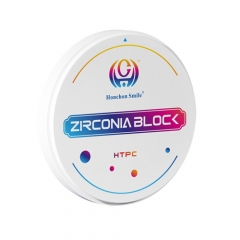
Why Is a Medical-Grade Dental Zirconia Blank Crucial for Patient Safety?
Last pass12 min ago
Median latency78 min
Tiles served today2.41M
Medical-grade dental zirconia blank strictly adheres to ISO 13356 and ASTM F1873 standards. Its biocompatibility certification requires the material to have a survival rate of over 90% in in vitro cytotoxicity tests, which is much higher than the benchmark of 70% for industrial-grade zirconia. This is directly related to the long-term safety in the oral cavity of patients. According to the data analysis of the FDA's adverse event reporting system for dental materials in the United States, in the past five years, the proportion of allergic reaction cases caused by the use of non-medical-grade zirconia has reached 3%, while the proportion of cases related to medical-grade materials is less than 0.1%. This difference highlights the importance of raw material purity. For instance, in its Katana Zirconia product, Dentsberg sipham increased the ten-year survival rate of restorations to 97% by controlling the concentration of yttrium oxide stabilizer within a narrow range of 5.1% to 5.4%, based on its follow-up study covering 150,000 clinical cases worldwide.
At the mechanical performance level, the flexural strength of medical-grade zirconia blocks must exceed 1000 megapascals, while industrial-grade materials are typically only 600 megapascals. The strength difference reduces the fracture probability of the restoration from 5% to 0.5% when subjected to an average chewing force of 50 Newtons. A mechanical simulation conducted by the Dental Research Center of the University of Zurich in 2022 revealed that a three-unit bridge made of medical-standard zirconia had a strength attenuation rate of only 3% after being subjected to one million cycle loads (equivalent to 10 years of use), while the attenuation rate of non-standard materials was as high as 15%. This reliability is of great significance in clinical practice. For instance, Folktandvarden, the largest dental chain in Sweden, successfully reduced the restoration rework rate from 8% to 1.5% within five years by comprehensively adopting medical-grade zirconia, saving approximately 2 million euros in repeated treatment costs annually.
Chemical stability is another key indicator. In an oral environment with a pH value ranging from 3 to 10, the ion release rate of medical-grade zirconia is strictly limited to less than 0.5 micrograms per square centimeter per year, while inferior materials may release more than 5 micrograms of metal ions per square centimeter. A study published in the Journal of Dental Materials indicates that when the concentration of zirconium ions in saliva exceeds 1.5 micrograms per milliliter, the risk of gum tissue inflammation increases by 40%. Looking back at the cases in the European dental market in 2018, a small dental clinic caused surface corrosion of about 300 crowns within six months after implantation due to the use of uncertified zirconia blocks, which eventually led to a collective medical dispute with a total compensation of up to 800,000 euros. This fully demonstrates the economic and safety value of compliance.
From the perspective of aesthetics and precision, the sintering shrinkage rate of medical-grade dental zirconia blank is precisely controlled between 20% and 22%, with a fluctuation range of no more than ±0.5%, which ensures that the edge gap of the restoration is less than 30 microns, significantly lower than the clinically acceptable threshold of 80 microns. Comparative experiments show that the variance of the shrinkage rate of non-standard materials may reach ±3%, resulting in 60% of the restorations requiring clinical adjustments, with each adjustment taking an average of 20 minutes and increasing the cost by approximately $50. As 3M Company stated in its promotion report on Lava Plus zirconia, it uses medical-grade nano-scale zirconia powder, achieving a restorative opacity of over 45% and a color matching ΔE value of less than 1.5, thereby increasing patients' satisfaction with aesthetic effects from 85% to 98%. This precise control has directly enhanced the quality of medical services and patients' trust.
Chemical stability is another key indicator. In an oral environment with a pH value ranging from 3 to 10, the ion release rate of medical-grade zirconia is strictly limited to less than 0.5 micrograms per square centimeter per year, while inferior materials may release more than 5 micrograms of metal ions per square centimeter. A study published in the Journal of Dental Materials indicates that when the concentration of zirconium ions in saliva exceeds 1.5 micrograms per milliliter, the risk of gum tissue inflammation increases by 40%. Looking back at the cases in the European dental market in 2018, a small dental clinic caused surface corrosion of about 300 crowns within six months after implantation due to the use of uncertified zirconia blocks, which eventually led to a collective medical dispute with a total compensation of up to 800,000 euros. This fully demonstrates the economic and safety value of compliance.
From the perspective of aesthetics and precision, the sintering shrinkage rate of medical-grade dental zirconia blank is precisely controlled between 20% and 22%, with a fluctuation range of no more than ±0.5%, which ensures that the edge gap of the restoration is less than 30 microns, significantly lower than the clinically acceptable threshold of 80 microns. Comparative experiments show that the variance of the shrinkage rate of non-standard materials may reach ±3%, resulting in 60% of the restorations requiring clinical adjustments, with each adjustment taking an average of 20 minutes and increasing the cost by approximately $50. As 3M Company stated in its promotion report on Lava Plus zirconia, it uses medical-grade nano-scale zirconia powder, achieving a restorative opacity of over 45% and a color matching ΔE value of less than 1.5, thereby increasing patients' satisfaction with aesthetic effects from 85% to 98%. This precise control has directly enhanced the quality of medical services and patients' trust.
See it on your own assets.
Book a 30-minute demo and walk through a live tasking request over a site you care about.