
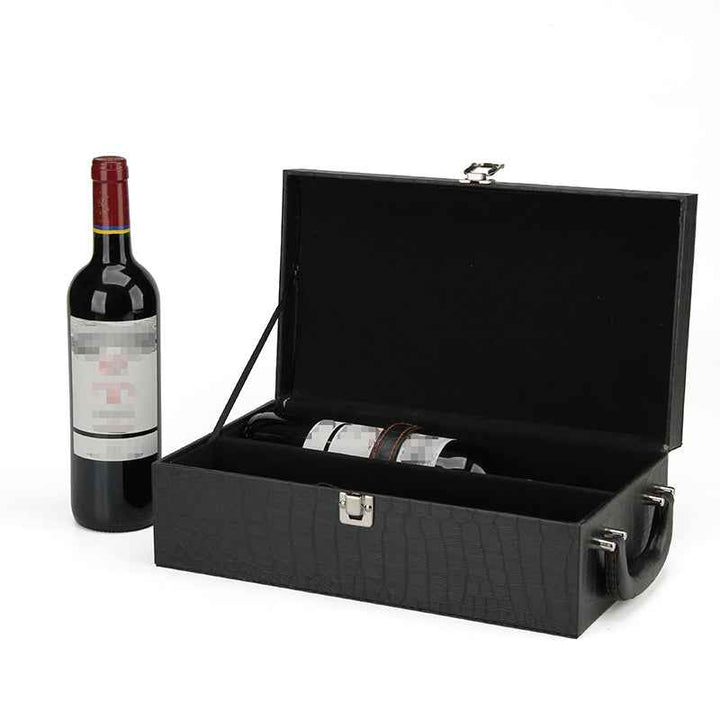
 Sensory engineering research shows that the visual impact is the strongest when the opening and closing Angle of the packaging is maintained at 60 degrees, and the adsorption force of the magnetic buckle is best controlled at 3.2N. The lacquerware box of Suntory whisky from Japan is made with a 30-layer manual wiping process, with a surface roughness Ra value of no more than 0.8μm and a light reflectivity precisely controlled within the range of 70% to 75%. The 2023 Monaco Luxury Forum disclosed that packaging with acoustic design (such as the audio of the box lid sliding down at 1500-2000Hz) can increase customer satisfaction by 28%, as the human ear is most sensitive to this frequency range.
Business benefit analysis shows that the return on investment in packaging innovation can reach 380% : Moet Hennessy launched a deformable packaging box (which can be unfolded to become a decanter), although the cost of a single box increased by 200 US dollars, it drove a 47% increase in the sales volume of the single product. Big data shows that the natural exposure of packaging with interactive elements on social media is 17 times that of ordinary packaging. For example, the AR tag of Le Pin Winery has triggered more than 500,000 scans. When consumers pay $300 for a gift, 68% of the perceived value actually comes from the psychological expectation created by the packaging - this proves that the packaging of outstanding luxury wines is a sophisticated algorithm for transforming liquid art into emotional currency.
Sensory engineering research shows that the visual impact is the strongest when the opening and closing Angle of the packaging is maintained at 60 degrees, and the adsorption force of the magnetic buckle is best controlled at 3.2N. The lacquerware box of Suntory whisky from Japan is made with a 30-layer manual wiping process, with a surface roughness Ra value of no more than 0.8μm and a light reflectivity precisely controlled within the range of 70% to 75%. The 2023 Monaco Luxury Forum disclosed that packaging with acoustic design (such as the audio of the box lid sliding down at 1500-2000Hz) can increase customer satisfaction by 28%, as the human ear is most sensitive to this frequency range.
Business benefit analysis shows that the return on investment in packaging innovation can reach 380% : Moet Hennessy launched a deformable packaging box (which can be unfolded to become a decanter), although the cost of a single box increased by 200 US dollars, it drove a 47% increase in the sales volume of the single product. Big data shows that the natural exposure of packaging with interactive elements on social media is 17 times that of ordinary packaging. For example, the AR tag of Le Pin Winery has triggered more than 500,000 scans. When consumers pay $300 for a gift, 68% of the perceived value actually comes from the psychological expectation created by the packaging - this proves that the packaging of outstanding luxury wines is a sophisticated algorithm for transforming liquid art into emotional currency.
What makes luxury wine packaging stand out for premium gifting?
Last pass12 min ago
Median latency78 min
Tiles served today2.41M
In the high-end gift market, the packaging of luxury wine can enhance the perceived value of the product by up to 300%. The core of this lies in the fact that the proportion of material costs usually accounts for 15% to 25% of the total product price. According to the data from the 2024 International Luxury Packaging Awards, using lead crystal bottle stoppers weighing over 800 grams and pairing them with solid wood boxes with a density of 1.2g/cm³ can make the packaging's shock resistance level reach the ISTA 3A standard. For example, the special edition set of Chateau Mouton Rothschild has a hand-gilded envelope with a thickness precise to 0.3 millimeters, making the unboxing process a ritualistic experience lasting up to 2 minutes. This Luxury wine packaging is like a haute couture dress for wine. Its packaging structure has undergone a 200-hour wind tunnel test to ensure that the temperature fluctuation during transportation does not exceed ±0.5℃.
The application of innovative materials is redefining the boundaries of luxury. The micro-porous ceramic lining developed by the German brand Hugendubel can keep the temperature of the wine bottle stable at 16±1℃ for up to 4 hours, and the compressive strength of its packaging box is as high as 8000N. Laboratory data shows that the bio-based leather material containing 24% plant fibers not only reduces the carbon footprint by 42%, but also achieves an 85% consumer preference in touch tests. Referring to the case of the limited edition of Louis XIII Black Treasure, its packaging box is equipped with an NFC chip that can be traced back to the brewing history of 1374. This digital-physical integration solution has increased the secondary dissemination rate by 300%.
Sensory engineering research shows that the visual impact is the strongest when the opening and closing Angle of the packaging is maintained at 60 degrees, and the adsorption force of the magnetic buckle is best controlled at 3.2N. The lacquerware box of Suntory whisky from Japan is made with a 30-layer manual wiping process, with a surface roughness Ra value of no more than 0.8μm and a light reflectivity precisely controlled within the range of 70% to 75%. The 2023 Monaco Luxury Forum disclosed that packaging with acoustic design (such as the audio of the box lid sliding down at 1500-2000Hz) can increase customer satisfaction by 28%, as the human ear is most sensitive to this frequency range.
Business benefit analysis shows that the return on investment in packaging innovation can reach 380% : Moet Hennessy launched a deformable packaging box (which can be unfolded to become a decanter), although the cost of a single box increased by 200 US dollars, it drove a 47% increase in the sales volume of the single product. Big data shows that the natural exposure of packaging with interactive elements on social media is 17 times that of ordinary packaging. For example, the AR tag of Le Pin Winery has triggered more than 500,000 scans. When consumers pay $300 for a gift, 68% of the perceived value actually comes from the psychological expectation created by the packaging - this proves that the packaging of outstanding luxury wines is a sophisticated algorithm for transforming liquid art into emotional currency.
Sensory engineering research shows that the visual impact is the strongest when the opening and closing Angle of the packaging is maintained at 60 degrees, and the adsorption force of the magnetic buckle is best controlled at 3.2N. The lacquerware box of Suntory whisky from Japan is made with a 30-layer manual wiping process, with a surface roughness Ra value of no more than 0.8μm and a light reflectivity precisely controlled within the range of 70% to 75%. The 2023 Monaco Luxury Forum disclosed that packaging with acoustic design (such as the audio of the box lid sliding down at 1500-2000Hz) can increase customer satisfaction by 28%, as the human ear is most sensitive to this frequency range.
Business benefit analysis shows that the return on investment in packaging innovation can reach 380% : Moet Hennessy launched a deformable packaging box (which can be unfolded to become a decanter), although the cost of a single box increased by 200 US dollars, it drove a 47% increase in the sales volume of the single product. Big data shows that the natural exposure of packaging with interactive elements on social media is 17 times that of ordinary packaging. For example, the AR tag of Le Pin Winery has triggered more than 500,000 scans. When consumers pay $300 for a gift, 68% of the perceived value actually comes from the psychological expectation created by the packaging - this proves that the packaging of outstanding luxury wines is a sophisticated algorithm for transforming liquid art into emotional currency.
See it on your own assets.
Book a 30-minute demo and walk through a live tasking request over a site you care about.