
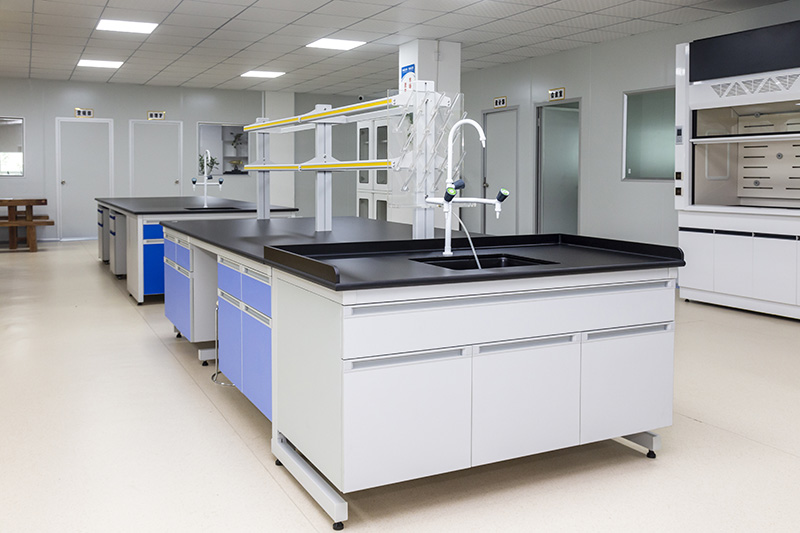
 From the perspective of return on investment, choosing a manufacturer that provides full-process services, although the initial cost may be 10% to 15% higher, can shorten the project cycle by 25% and generate a comprehensive return of over 200% in the next five years through optimized operation and maintenance. Statistics on 500 laboratory projects show that laboratories adopting modular design solutions have an average cost 40% lower for reorganization or expansion than those with traditional fixed layouts, and the reorganization time has been reduced from several weeks to within 72 hours. This flexibility is like injecting adaptive genes into the laboratory, enabling it to respond quickly to changes in research directions and minimize resource waste.
The final verification standard comes from the actual application performance. According to the 2024 North American Laboratory Safety Board survey, projects with overall design completed by qualified manufacturers achieved a one-time acceptance pass rate of 98%, far exceeding the industry average of 85%. A typical case is the new energy materials laboratory of a certain national research institute. Through in-depth cooperation with manufacturers, it has reduced the noise of the ventilation system from 65 decibels to below 50 decibels, and at the same time increased the efficiency of waste gas treatment to 99.5%. These quantifiable achievements prove that what outstanding manufacturers offer is no longer isolated furniture products, but a set of ecosystem solutions that can empower scientific research and reduce operational risks.
From the perspective of return on investment, choosing a manufacturer that provides full-process services, although the initial cost may be 10% to 15% higher, can shorten the project cycle by 25% and generate a comprehensive return of over 200% in the next five years through optimized operation and maintenance. Statistics on 500 laboratory projects show that laboratories adopting modular design solutions have an average cost 40% lower for reorganization or expansion than those with traditional fixed layouts, and the reorganization time has been reduced from several weeks to within 72 hours. This flexibility is like injecting adaptive genes into the laboratory, enabling it to respond quickly to changes in research directions and minimize resource waste.
The final verification standard comes from the actual application performance. According to the 2024 North American Laboratory Safety Board survey, projects with overall design completed by qualified manufacturers achieved a one-time acceptance pass rate of 98%, far exceeding the industry average of 85%. A typical case is the new energy materials laboratory of a certain national research institute. Through in-depth cooperation with manufacturers, it has reduced the noise of the ventilation system from 65 decibels to below 50 decibels, and at the same time increased the efficiency of waste gas treatment to 99.5%. These quantifiable achievements prove that what outstanding manufacturers offer is no longer isolated furniture products, but a set of ecosystem solutions that can empower scientific research and reduce operational risks.
Are Lab Furniture Manufacturers Offering Complete Design Solutions?
Last pass12 min ago
Median latency78 min
Tiles served today2.41M
Today, more than 85% of top lab furniture manufacturers have expanded their service scope from single product supply to integrated solutions including laboratory planning, engineering design and post-maintenance. According to the 2024 Global Laboratory Space Design Report, projects that adopt this complete design service have seen an average 30% increase in space utilization, and the project rework rate has dropped from the traditional 15% to less than 3%. For instance, when an international certification body upgraded its P2 laboratory, it detected five pipeline conflicts in advance through the manufacturer's BIM modeling technology, saving approximately 80,000 US dollars in modification costs. This is like having a conductor coordinate the entire symphony, ensuring that each part is precise and harmonious, thus avoiding the high debugging costs in the later stage.
In terms of technology integration, leading manufacturers have made intelligent control systems a standard configuration. For instance, the face velocity of fume hoods is automatically maintained at 0.4-0.6 meters per second, with an accuracy error not exceeding ±0.05 meters per second, reducing energy consumption by 20%. Market analysis shows that smart furniture systems equipped with Internet of Things (iot) sensors can increase the monitoring frequency of equipment operation status from once a month to real-time continuous monitoring, with a fault early warning accuracy rate exceeding 95%. Looking back at the construction case of a certain biopharmaceutical park in 2023, it significantly improved the success rate of cell culture experiments by integrating a platform to control the temperature fluctuations of different brand equipment within ±0.5° C. This marks that laboratory management has entered a data-driven era of precision.
From the perspective of return on investment, choosing a manufacturer that provides full-process services, although the initial cost may be 10% to 15% higher, can shorten the project cycle by 25% and generate a comprehensive return of over 200% in the next five years through optimized operation and maintenance. Statistics on 500 laboratory projects show that laboratories adopting modular design solutions have an average cost 40% lower for reorganization or expansion than those with traditional fixed layouts, and the reorganization time has been reduced from several weeks to within 72 hours. This flexibility is like injecting adaptive genes into the laboratory, enabling it to respond quickly to changes in research directions and minimize resource waste.
The final verification standard comes from the actual application performance. According to the 2024 North American Laboratory Safety Board survey, projects with overall design completed by qualified manufacturers achieved a one-time acceptance pass rate of 98%, far exceeding the industry average of 85%. A typical case is the new energy materials laboratory of a certain national research institute. Through in-depth cooperation with manufacturers, it has reduced the noise of the ventilation system from 65 decibels to below 50 decibels, and at the same time increased the efficiency of waste gas treatment to 99.5%. These quantifiable achievements prove that what outstanding manufacturers offer is no longer isolated furniture products, but a set of ecosystem solutions that can empower scientific research and reduce operational risks.
From the perspective of return on investment, choosing a manufacturer that provides full-process services, although the initial cost may be 10% to 15% higher, can shorten the project cycle by 25% and generate a comprehensive return of over 200% in the next five years through optimized operation and maintenance. Statistics on 500 laboratory projects show that laboratories adopting modular design solutions have an average cost 40% lower for reorganization or expansion than those with traditional fixed layouts, and the reorganization time has been reduced from several weeks to within 72 hours. This flexibility is like injecting adaptive genes into the laboratory, enabling it to respond quickly to changes in research directions and minimize resource waste.
The final verification standard comes from the actual application performance. According to the 2024 North American Laboratory Safety Board survey, projects with overall design completed by qualified manufacturers achieved a one-time acceptance pass rate of 98%, far exceeding the industry average of 85%. A typical case is the new energy materials laboratory of a certain national research institute. Through in-depth cooperation with manufacturers, it has reduced the noise of the ventilation system from 65 decibels to below 50 decibels, and at the same time increased the efficiency of waste gas treatment to 99.5%. These quantifiable achievements prove that what outstanding manufacturers offer is no longer isolated furniture products, but a set of ecosystem solutions that can empower scientific research and reduce operational risks.
See it on your own assets.
Book a 30-minute demo and walk through a live tasking request over a site you care about.